How to Survive Family Gatherings in 2026: A Holiday Conflict Survival Guide
TL;DR
Holiday gatherings create perfect conditions for conflict: forced togetherness, high expectations, disrupted routines, and accumulated family history. Survival requires proactive preparation (managing expectations, identifying triggers, planning with allies), in-the-moment techniques (grey-rocking, topic-changing, strategic breaks), and post-event recovery. Remember: you're not obligated to attend, and imperfect holidays are the norm, not the exception.
Key Takeaways
- •Holidays are uniquely conflict-prone due to forced togetherness, high expectations, disrupted routines, and alcohol
- •Preparation is your most powerful tool—adjust expectations, pre-plan with allies, identify triggers, set boundaries
- •Grey-rocking (becoming boring and unresponsive) effectively shuts down people seeking to provoke you
- •Master the topic change—redirect through food, questions about others, or distraction
- •Use strategic bathroom breaks liberally—the bathroom is your sanctuary
- •Know when to engage and when to disengage—not every battle is worth fighting
- •Have exit plans ready including departure time, signals with your partner, and acceptable excuses
- •Manage your own nervous system with calming techniques, grounding exercises, and pausing before responding
- •Post-gathering recovery is essential—prioritize self-care and give yourself time before addressing issues
- •Some conflicts warrant later addressing using structured tools like VerdictBuddy when emotions have cooled
- •Long-term, you can change patterns through alternative formats, limited attendance, or new traditions
- •Imperfect holidays are normal—most families have tension and having difficulty doesn't mean you're uniquely dysfunctional
TL;DR
Holiday family gatherings are prime conditions for conflict: high expectations, close quarters, accumulated history, and disrupted routines combine to create tension. Proactive survival strategies include managing your own expectations, pre-planning with allies, identifying triggers, and having exit strategies ready. When conflict does arise, techniques like grey-rocking, topic-changing, and strategic bathroom breaks can prevent escalation. Post-holiday recovery is as important as survival—process what happened, maintain your boundaries, and recognize that imperfect holidays are normal.
Introduction
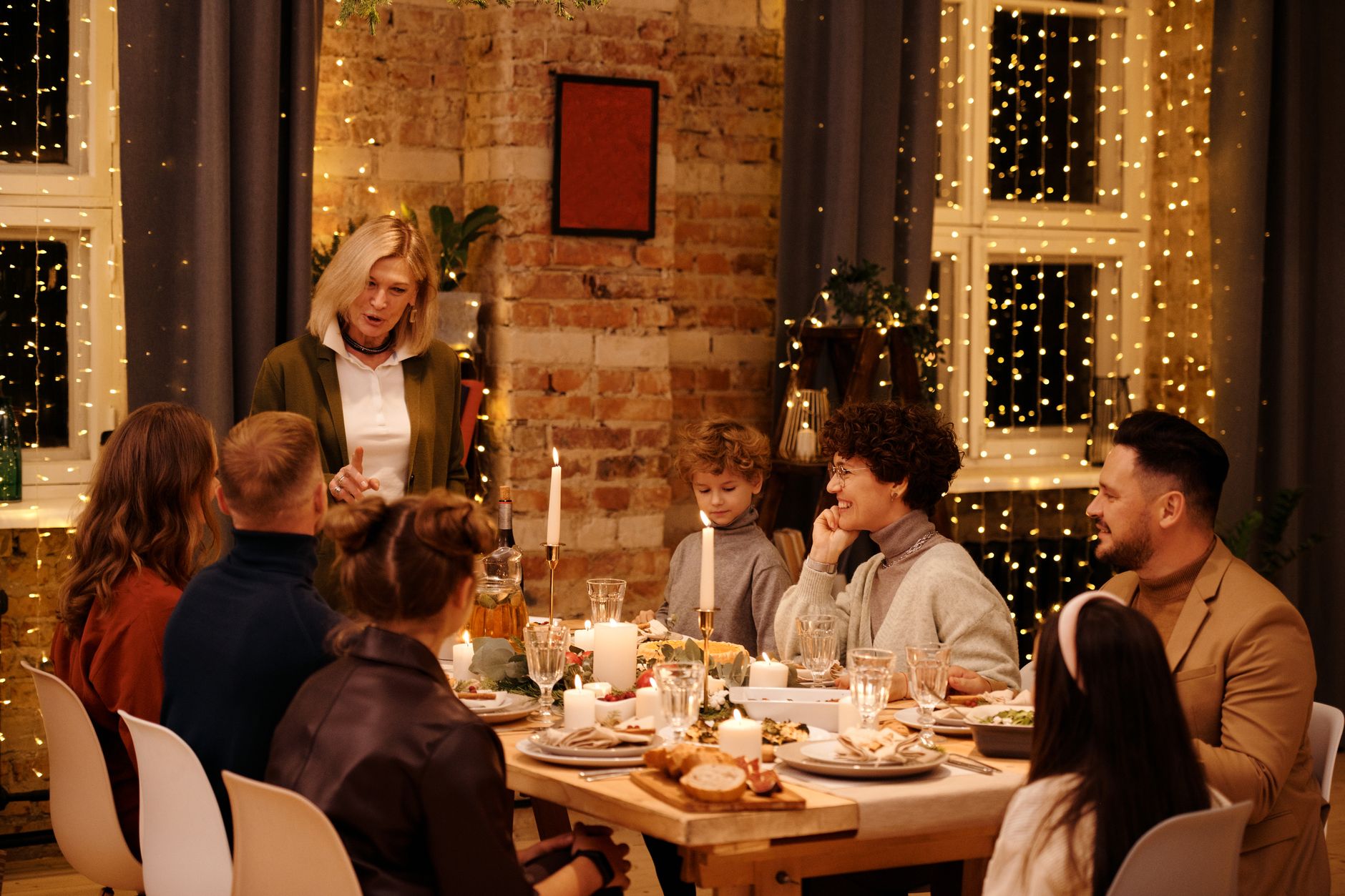
The holiday season is depicted in movies, advertisements, and social media as a time of magical family togetherness—warm lights, genuine laughter, multi-generational harmony around a bountiful table. For some fortunate families, this depiction isn't too far from reality. But for millions of others, the holidays bring dread, anxiety, and a familiar dance of conflict that seems to repeat year after year.
You know the scenario: You've barely walked through the door before someone makes a comment about your weight, your relationship status, your career, or your politics. The siblings who haven't spoken all year bristle in the same patterns they've followed since childhood. Alcohol loosens tongues that would be better kept still. Historical grievances resurface, wearing thin disguises of present concerns. By the time you drive home, you're emotionally exhausted, wondering why you put yourself through this again.
Why Holidays Are Conflict Accelerators
Several factors make holiday gatherings uniquely prone to tension:
Forced togetherness: Unlike regular life, where you control when and how long you see family, holidays often require extended time in close quarters with limited escape options. High expectations: The cultural narrative of perfect holiday cheer creates pressure that reality rarely meets. The gap between expectation and reality breeds disappointment and frustration. Disrupted routines: Travel, different sleeping arrangements, unfamiliar environments, and irregular eating and drinking patterns all increase stress and reduce emotional regulation capacity. Accumulated history: Every person at that table carries decades of relationships—old wounds, established dynamics, unresolved issues—that don't pause for the holidays. Different life stages: Families span generations with very different concerns, values, and perspectives. What matters to a 75-year-old grandparent differs vastly from what matters to a 25-year-old grandchild. Alcohol and food: Changed eating and drinking patterns, particularly increased alcohol consumption, lower inhibitions and impair judgment at precisely the moments when those capacities are most needed. Regression triggers: Something about returning to childhood homes and family roles tends to reactivate younger, less mature versions of ourselves—even when we've grown significantly.What This Guide Offers
This survival guide provides practical, tested strategies for navigating holiday family conflict. You'll learn:
- How to prepare mentally and practically before gatherings
- Techniques for managing yourself when triggered
- Ways to prevent escalation without capitulating
- Strategies for common difficult situations
- How to recover and process after challenging events
- Long-term approaches for improving future holidays
Tools like VerdictBuddy can be particularly valuable after holidays for processing what happened with family members and creating agreements about how to handle recurring issues differently in the future. The post-holiday period, when emotions have cooled, is often ideal for this kind of conversation.
Before the Gathering: Preparation Is Everything
Manage Your Expectations (Radically)
The single most impactful thing you can do for holiday peace is adjust your expectations—dramatically. If you enter expecting transformation, healing, or magical family harmony, you're setting yourself up for disappointment and resentment.
Instead of expecting:- That your mother will finally accept your life choices
- That Uncle Bob will stop making political comments
- That sibling rivalries will melt away in holiday spirit
- That this year will be "different"
- Some uncomfortable moments will occur
- Old patterns will likely resurface
- Certain people will behave exactly as they always do
- You will manage yourself as best you can in an imperfect situation
This isn't pessimism—it's realistic planning. When you expect difficulty, you're pleasantly surprised by good moments rather than crushed by inevitable friction.
Pre-Plan with Your Ally
If you're attending with a partner, spouse, or sympathetic family member, coordinate in advance:
Establish signals: Create subtle cues for "I need backup," "Let's change topics," "I need a break," and "It's time to leave." These might be physical (scratching your ear, adjusting your watch) or verbal ("I could really use some fresh air"). Divide protective duties: Decide who will run interference with which difficult people. "You handle Dad's political rants; I'll manage Mom's questions about kids." Plan escape routes: Agree on acceptable excuses for breaks and what time you'll leave. Having a united front on departure prevents the "but we were having such a nice time" guilt trap. Debrief plan: Know when and how you'll process the event afterward. "Let's talk about it on the drive home" or "I need some quiet time after, then we'll discuss it tomorrow."Identify Your Triggers
Self-knowledge is your greatest asset. Before the gathering, honestly identify:
Topics that set you off: Politics, religion, relationship status, career, weight, parenting choices, past mistakes—what subjects reliably trigger your defensiveness or anger? People who trigger you: Which family members consistently provoke you? What specifically do they do or say that activates you? Environmental triggers: Are you more likely to lose your cool when you're hungry, tired, or after you've had a drink? Late in the evening versus early in the gathering? Internal warning signs: What are your personal cues that you're becoming activated—physical sensations, thoughts, emotions, or behaviors?With this map, you can anticipate and prepare rather than being blindsided.
Set Your Boundaries in Advance
Before you arrive, decide on your limits:
Topics you won't engage: "I'm not discussing my dating life/politics/that family drama this year." Behavior you won't accept: "If someone makes racist comments, I will calmly say something and then disengage." Time limits: "We're leaving by 7 PM regardless of pressure to stay." Self-care non-negotiables: "I will take a 15-minute walk at some point, even if it seems rude."Communicating these boundaries in advance can help: "Just so you know, I've decided I'm not going to discuss politics at family events anymore. I'm asking in advance for everyone to respect that."
During the Gathering: Survival Techniques
The Grey Rock Method
When someone tries to engage you in conflict or extract emotional reactions, become as boring and uninteresting as possible. Provide minimal, neutral responses that give nothing to react to:
"What do you think about [controversial topic]?"Grey rock: "Hmm, I haven't really been following that. Pass the potatoes?"
"When are you two going to have kids?"Grey rock: "We'll see. Have you tried this stuffing? It's really good."
"Your generation just doesn't understand hard work."Grey rock: "Mm-hmm. So, Aunt Sarah, how was your trip to Arizona?"
The goal is to be so uninteresting that the provocateur loses interest and moves on.
The Art of the Topic Change
Redirecting conversation is a crucial skill. Effective topic-changers:
Bridge through food: "Speaking of that, did anyone try the [dish]? Whose recipe is this?" Ask questions about others: People generally prefer talking about themselves. "I want to hear about [person's hobby, trip, grandchild]." Invoke absent topics: "That reminds me, did anyone hear about [local news, weather event, community happening]?" Create a distraction: "Oh, I think I hear [child/pet] needing something. Excuse me."Strategic Bathroom Breaks
The bathroom is your sanctuary. When things get tense, a timely "excuse me for a moment" provides:
- Physical separation from triggering situations
- Time to calm your nervous system
- A chance to text a friend for support
- Space to practice breathing or grounding exercises
- A legitimate reason to leave the room that no one can argue with
Don't feel guilty about frequency. If you need five bathroom breaks to survive the gathering, take five bathroom breaks.
The United Front with Your Partner
If you're there with a partner, remember you're a team:
Protect each other: If your mother is grilling your partner, intervene. "Hey Mom, I wanted to show you something in the kitchen." If someone criticizes your partner, redirect before your partner has to defend themselves. Legitimate excuses: "We promised to call our friends by 6" or "Partner hasn't been feeling great, so we need to head out early" provide graceful exits that are hard to argue with. Post-gathering debriefing: Validate each other's experiences. "That was really frustrating when your uncle said that. I'm sorry you had to deal with that."Managing Your Own Emotional Reactivity
When you feel yourself getting triggered, try these in-the-moment techniques:
Physiological sigh: Two short inhales through the nose, followed by a long exhale through the mouth. This is the fastest known way to reduce physiological arousal. 5-4-3-2-1 grounding: Notice 5 things you can see, 4 you can hear, 3 you can touch, 2 you can smell, 1 you can taste. This pulls you out of reactive thinking into present awareness. STOP: Before responding, Stop, Take a breath, Observe what's happening inside you, and Proceed with intention rather than reaction. The 10-second pause: Silently count to 10 before responding. The pause breaks automaticity and creates space for a more considered response. Curiosity reframe: Instead of "they're attacking me," try "Isn't it interesting that they're bringing this up? I wonder what they're really feeling."When to Engage, When to Disengage
Not every provocation requires response. Consider:
Engage when:- The issue matters deeply to you and you have capacity to discuss it
- You believe genuine dialogue is possible with this person
- Your silence would communicate tacit agreement with something harmful
- You can address it calmly without escalating
- You're already activated and unlikely to respond well
- The person has shown no capacity for genuine discussion
- Engaging would ruin the gathering for others
- Your safety (emotional or physical) is at risk
- The issue isn't worth the energy
There's no shame in choosing your battles. Declining to engage isn't weakness—it's wisdom about how to use limited energy.
Handling Common Difficult Situations
The Political Argument
Politics have become an increasingly fraught topic at family gatherings.
Prevention: If possible, establish a "no politics" agreement before the gathering. Some families successfully implement this rule. When it starts anyway:- First attempt: Change the topic. "I really don't want to talk politics today. Let's talk about something else."
- If pressed: "I have a different view, but I'd rather enjoy our time together than argue. Tell me about [other topic]."
- If it continues: "I'm going to step away for a bit. I'll be back." Then physically remove yourself.
The Intrusive Personal Questions
Questions about relationships, children, weight, career, finances, or other personal matters can feel invasive and judgmental.
Deflection options:- "That's a boring topic. What's new with you?"
- "Same as always! How about those [local sports team]?"
- "I don't really want to talk about that, but thanks for asking."
- "We'll see! So tell me about your [trip/hobby/grandkids]."
- "I'm not going to discuss that. What else is going on?"
- "That's private. Let's talk about something else."
- Simply changing the subject without addressing the question at all.
You don't owe anyone explanations about your personal life, even if they're family.
The Old Wounds Resurfacing
Sometimes someone brings up past grievances, mistakes, or conflicts.
In the moment:- "I'd rather not rehash that, especially today."
- "That was a long time ago. I'd like to focus on enjoying today."
- "If you want to discuss that, let's do it another time, not at the holiday gathering."
- Remind yourself: You're an adult now, not the child who experienced this.
- Use grounding techniques to stay in the present.
- Plan to process these feelings after the event, with a therapist, friend, or through journaling.
The Family Member Who's Had Too Much to Drink
Alcohol loosens inhibitions and impairs judgment, making conflict more likely.
If you see it developing:- Don't try to reason with an intoxicated person—it won't work.
- Disengage physically. Move to another area.
- Enlist a sober ally to help manage the situation.
- Consider whether it's time to leave.
- Set a limit for yourself in advance.
- Alternate alcoholic drinks with water.
- Eat food with drinks.
- Be aware that your triggering threshold is lower when drinking.
- Consider staying sober if past holidays have involved conflict you regret.
The Moment You Feel Like Exploding
You've been managing all day, and suddenly you feel yourself about to say something you'll regret.
Immediate actions:- You don't need to explain or apologize for taking a break.
- If asked, a simple "I needed a moment" is sufficient.
- Don't feel obligated to resume the triggering conversation.
After the Gathering: Recovery and Processing
Immediate Self-Care
The hours and days after a difficult holiday gathering require intentional recovery:
Physical recovery: Holiday stress affects your body. Prioritize sleep, hydrating, eating well, and gentle movement. Emotional processing: Talk to a supportive person, journal, or simply sit with your feelings without judgment. Return to routine: Reinstating your normal routine—exercise, meals, sleep schedule—helps restore equilibrium. Limit continued exposure: If text chains or social media continue the drama, mute or disengage as needed.What Not to Do
Ruminate: Endlessly replaying what happened or what you should have said keeps you stuck. Acknowledge the feelings, then redirect. Vent to everyone: Some processing is helpful; constant rehashing reinforces distress. Choose one or two trusted people for support. Make major decisions immediately: "I'm never speaking to them again!" decisions made in the heat of post-holiday distress may not reflect your considered judgment. Beat yourself up: If you didn't handle things perfectly, that's human. One difficult holiday doesn't define you or your relationships.When to Address Issues (And How)
Some holiday conflicts reveal issues worth addressing directly. But timing matters:
Wait: Don't try to resolve things in the immediate aftermath when emotions are high. Give it at least a week. Prepare: Get clear on what you want to communicate and what outcome you're seeking. Choose your method: Some conversations are better in person; others might be easier in writing. Focus on future: Rather than relitigating what happened, focus on what you'd like to be different going forward. Consider using tools: A structured framework like VerdictBuddy can help take the heat out of these conversations by providing neutral ground for discussing changes.Long-Term Strategies for Future Holidays
If holidays are consistently difficult, consider longer-term changes:
Alternative formats: Host yourself so you control the environment. Suggest restaurant gatherings with natural time limits. Rotate locations. Limit attendance: Attend some gatherings but not others. Show up for fewer hours. Skip years when you need to. Create new traditions: Start your own holiday traditions with chosen family, friends, or just yourself and your immediate household. Lower the stakes: Some families need to accept that holidays together aren't working and find other times to connect—or accept limited connection. Therapy: If family dynamics are significantly impacting your mental health, working with a therapist can help you develop coping strategies and make decisions about your participation.Key Takeaways
Frequently Asked Questions
Q: My family expects me to attend every holiday gathering. How do I set limits?A: Start by communicating clearly: "I won't be able to make it to [event]" or "I'm going to limit my attendance this year to protect my health." You don't owe extensive justification. Expect pushback, maintain your position kindly but firmly, and accept that some people may be disappointed. Their disappointment is theirs to manage.
Q: My partner and I have families in different cities. How do we handle the expectation to be everywhere?A: This is a common challenge. Options include alternating years, splitting holidays, limiting attendance at some gatherings, or creating new traditions that don't require travel. The key is agreeing as a couple on what works for you, then presenting a united front to both families.
Q: How do I protect my children from difficult family dynamics?A: Trust your judgment about what exposure is healthy. You can limit unsupervised time with problematic relatives, prepare children for what they might hear, give them permission to step away, and debrief with them afterward. If behavior at gatherings is harmful to your children, limiting or eliminating attendance is appropriate.
Q: What if I'm hosting and someone is causing problems?A: As host, you have authority over your space. You can say "We don't discuss that topic in this house" or "I'm going to ask you to step outside to calm down." In extreme cases, you can ask someone to leave. It's your home, and you set the rules.
Q: How do I handle my anxiety about upcoming holidays?A: Preparation helps: know your triggers, plan your strategies, have exit plans. Practice grounding techniques before you need them. Limit catastrophic thinking by reminding yourself you've survived previous holidays. Consider working with a therapist to develop coping strategies if anxiety is significant.
Q: Is it okay to just skip holiday gatherings entirely?A: Yes. You are not obligated to attend events that significantly harm your wellbeing. Missing gatherings may have social costs, but you get to weigh those against the mental health costs of attending. Some people need to opt out temporarily; others make it permanent. It's your choice.
Q: My family says I'm too sensitive when I set boundaries. Are they right?A: "You're too sensitive" is a common response to boundaries and a way of deflecting responsibility. Having boundaries and limits is healthy. If family consistently dismisses your needs, that's information about them, not about whether your needs are valid.
Q: How do I handle it when siblings or cousins gang up on me?A: Try not to respond to multiple attackers at once—it escalates the dynamic. Speak directly to one person. If that doesn't work, disengage: "I'm not going to discuss this when I feel ganged up on. Let's change the subject or I'll take a break." Then follow through.
Q: What do I do if conflict erupts in front of the whole family?A: First priority: don't escalate. Keep your voice calm and low. You can say "Let's talk about this later, not in front of everyone" or simply disengage. If others witness you staying calm while another person escalates, they see the truth of the situation. Afterward, process with supportive allies.
Q: How do I repair things after I've lost my cool at a family gathering?A: Take responsibility for your behavior without excessive apology: "I lost my cool earlier and I'm sorry about that. It wasn't how I wanted to handle things." You can acknowledge your behavior without agreeing that the other person was right or that their behavior was acceptable. Focus on what you'll do differently, not on extensive self-flagellation.
Conclusion
Holiday family conflict is so common that "surviving the holidays" has become its own genre of advice, memes, and collective commiseration. If you're dreading an upcoming gathering or recovering from a difficult one, know that you're in vast company.
The strategies in this guide—preparation, expectation management, in-the-moment techniques, and post-gathering recovery—won't make difficult family dynamics disappear. They can, however, help you navigate with more skill, preserve your mental health, and maintain your sense of self even in challenging environments.
Some families do improve over time. Old patterns can shift, sometimes dramatically. People grow, perspectives change, and relationships that seemed hopelessly stuck can find new footing. But this growth typically happens through incremental changes over years rather than holiday miracles.
In the meantime, your job isn't to fix your family. Your job is to take care of yourself, set appropriate boundaries, engage when engagement serves you, and protect your wellbeing when it doesn't. Sometimes the most loving thing you can do—for yourself and ultimately for the relationships—is to limit your exposure until and unless things change.
After particularly difficult gatherings, tools like VerdictBuddy can help by providing a structured way to discuss recurring issues with specific family members. Having these conversations outside the holiday pressure, when everyone has had time to calm down, often produces better results than trying to resolve things in the moment.
Whatever this holiday season brings, remember: you're an adult with choices. You can decide how much of yourself to bring, how long to stay, what to engage with, and what to let go. Imperfect holidays don't mean you've failed—they mean you're part of a complicated family, which is to say, you're part of nearly every family that has ever existed.
Need to address recurring family conflict after the holidays? VerdictBuddy provides a neutral framework for discussing sensitive issues and creating clear agreements. Start building better family dynamics today.
Sources & References
Frequently Asked Questions
Written by
VerdictBuddy Team
The VerdictBuddy team specializes in conflict resolution, relationship psychology, and communication strategies.