Family Conflict During Holidays and Gatherings: A Survival Guide for 2026
TL;DR
Holiday family gatherings amplify existing tensions through forced proximity, disrupted routines, heightened expectations, and alcohol consumption. Success requires proactive boundary-setting before gatherings, realistic expectation management, strategic alliance-building with supportive relatives, prepared de-escalation techniques, and exit strategies when needed. The fundamental principle is accepting you cannot change family members—only your responses to them.
Key Takeaways
- •Forced proximity, disrupted routines, and heightened expectations create a perfect storm for holiday conflict
- •The myth of the perfect holiday creates shame and disappointment that worsens actual experiences
- •Set boundaries proactively before gatherings rather than reactively during conflict
- •Build support systems including pre-gathering allies, in-gathering allies, and post-gathering processing partners
- •The gray rock method—becoming boring and unengaging—works well for drama-seeking relatives
- •Partners should present a united front and prioritize each other over family peace
- •First holidays after loss, divorce, or estrangement require special consideration and scaled-back expectations
- •You are not obligated to repeat gatherings that consistently harm you
- •Professional help is appropriate when holiday anxiety significantly impacts functioning
- •Creating new traditions with chosen family is a valid alternative to toxic biological family gatherings
TL;DR
Holiday family gatherings intensify existing tensions through forced proximity, disrupted routines, heightened expectations, and alcohol consumption. Successful navigation requires proactive boundary-setting, realistic expectation management, strategic alliance-building, and prepared exit strategies. The key is accepting you cannot change family members—only your responses to them.
The Holiday Pressure Cooker: Understanding Why Family Gatherings Explode
The winter holidays represent a cultural paradox: we celebrate togetherness and gratitude while simultaneously dreading the very gatherings meant to embody those values. For many families, Thanksgiving through New Year's becomes an annual stress marathon punctuated by passive-aggressive comments, political arguments, and the excavation of decades-old grievances.
Understanding why holiday gatherings so reliably produce conflict is the first step toward navigating them more successfully. The combination of factors that converge during these events creates conditions almost perfectly designed to trigger our worst relational patterns.
The Perfect Storm of Holiday Stress
Several elements combine to make holiday gatherings uniquely challenging:
Forced proximity: Unlike regular family contact where you can limit duration and frequency, holidays often require extended time together—sometimes multiple days under the same roof with limited escape options. Disrupted routines: Travel, sleeping in unfamiliar beds, altered eating schedules, and deviation from normal self-care practices leave everyone's nervous systems dysregulated before interactions even begin. Heightened expectations: Cultural narratives about "magical" holiday experiences create pressure to manufacture joy and connection, making normal friction feel like failure. Financial stress: Gift-giving obligations, travel costs, and hosting expenses create background anxiety that shortens tempers. Alcohol consumption: Many holiday traditions center on drinking, which lowers inhibitions and impairs the emotional regulation skills people normally employ. Memory triggers: Returning to childhood homes, handling family heirlooms, and encountering old photographs can activate unprocessed grief, trauma, or resentment. Role regression: Adult children often find themselves reverting to childhood dynamics when surrounded by parents and siblings, regardless of how much personal growth they've achieved.The Mythology of the Perfect Holiday
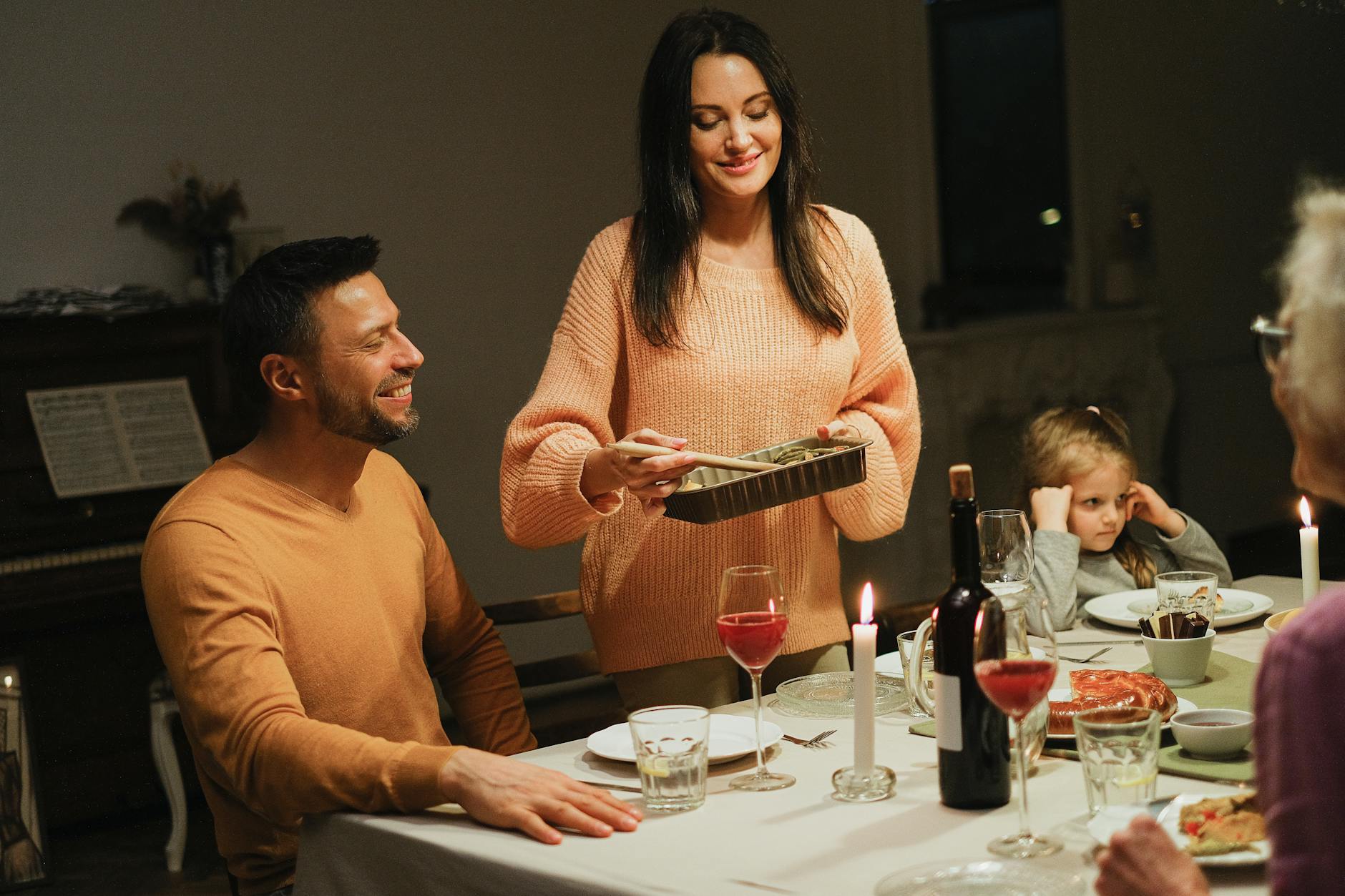
Perhaps no factor contributes more to holiday misery than the gap between expectation and reality. Media depictions of harmonious family gatherings—everyone laughing around a perfectly set table, grateful and connected—bear little resemblance to most people's actual experiences.
This mythology creates:
- Shame about normal family dysfunction
- Pressure to perform happiness even when struggling
- Resentment toward family members who disrupt the fantasy
- Disappointment that poisons whatever genuine connection might occur
Releasing attachment to the perfect holiday paradoxically makes satisfying gatherings more achievable.
Common Holiday Conflict Patterns
While every family's dynamics are unique, certain conflict patterns appear across cultures and contexts.
The Political Divide
Contemporary political polarization has made holiday gatherings minefields for many families. When relatives hold fundamentally different worldviews on heated issues—immigration, healthcare, social justice, elections—simple conversations can rapidly escalate into bitter arguments.
These conflicts are particularly painful because they often feel like attacks on core identity and values rather than mere disagreements about policy. When your uncle dismisses your deeply held beliefs, it can feel like rejection of who you are as a person.
Strategies for political conflicts:- Establish explicit no-politics agreements before gatherings
- Redirect conversations when they approach dangerous territory
- Acknowledge that changing minds is unlikely—focus on maintaining relationship
- Find shared values beneath surface disagreements
- Accept that some relatives may be genuinely incompatible with peaceful interaction
The Comparison Game
Holidays bring together family members at different life stages and levels of achievement, creating fertile ground for comparison-driven conflict:
- "Why aren't you married yet?"
- "When are you having children?"
- "How's your job search going?"
- "Your cousin just bought a house..."
These comparisons, whether delivered with apparent concern or obvious judgment, can devastate recipients while seeming innocuous to questioners.
Strategies for comparison conflicts:- Prepare brief, deflecting responses: "I'm happy with where I am right now"
- Redirect to the questioner: "What's new in your life?"
- Enlist allies to interrupt or change subjects
- Remember that comparison says more about the questioner's anxiety than your worth
The Parenting Battlefield
When multiple generations gather, differing approaches to child-rearing become visible and frequently criticized:
- Grandparents undermining parental decisions
- Siblings judging each other's discipline or screen time policies
- Childless relatives offering unsolicited advice
- Children manipulating between adults with different rules
- Establish boundaries clearly before arrival: "We don't give kids sugar before bedtime"
- Present a united front with your partner
- Accept that you cannot control what happens when you're not present
- Choose battles—some grandparent indulgences aren't worth fighting
The Historical Grievance
Some holiday conflicts aren't about present circumstances but about injuries that occurred years or decades ago. A parent who was absent during childhood, a sibling who received preferential treatment, an in-law who insulted someone's spouse at a previous gathering—these wounds can reopen with minimal provocation.
Strategies for historical grievances:- Consider whether addressing the issue directly might help (often in a separate conversation, not at the holiday table)
- Accept that some family members will never acknowledge past harm
- Limit exposure to those who consistently reinjure you
- Focus on what you can control: your boundaries and responses
The Substance-Fueled Explosion
Many holiday conflicts are alcohol-accelerated. The uncle who becomes argumentative after his fourth drink, the cousin who grows maudlin and accusatory, the father who says things he'd never say sober—these patterns often repeat year after year.
Strategies for alcohol-related conflicts:- Host alcohol-free or alcohol-limited gatherings
- Plan arrivals and departures to minimize overlap with peak drinking
- Have extraction plans ready for when someone becomes intoxicated
- Recognize that you cannot control others' drinking—only your exposure to its consequences
Proactive Preparation: Before the Gathering
The most effective conflict management happens before family members arrive. Thoughtful preparation can prevent many explosions and provide resources for handling those that occur anyway.
Setting Realistic Expectations
Begin by honestly assessing what's actually likely to happen:
- Which family members reliably trigger you?
- What topics predictably cause conflict?
- How long can you comfortably spend with specific relatives?
- What are non-negotiable boundaries for your wellbeing?
This assessment isn't pessimism—it's preparation. Knowing what you're walking into allows you to plan accordingly rather than being blindsided.
Strategic Boundary-Setting
Boundaries work best when established proactively rather than in the heat of conflict:
Communicate limits in advance: "We're only staying until 3 pm this year" or "I'm not discussing my dating life" Enlist support: Ask partners, allies, or understanding relatives to help enforce boundaries Prepare exit strategies: Know how you'll leave if necessary—have your own transportation, arrange a signal with your partner, identify quiet spaces for breaks Accept consequences: Some relatives will push back on boundaries; be prepared to maintain them anywayBuilding Your Support System
Navigating difficult family gatherings is easier with support:
Pre-gathering allies: Friends you can text from the bathroom for encouragement In-gathering allies: Relatives who understand the dynamics and can provide relief Post-gathering processing: Someone to debrief with after events Professional support: Consider scheduling therapy sessions before and after major holidaysPhysical Self-Care Planning
Maintaining your nervous system regulation is crucial for managing triggers:
Sleep: Prioritize rest even if it means missing late-night family activities Movement: Build in walks, runs, or other exercise during multi-day gatherings Nutrition: Don't rely solely on holiday food; bring snacks that support your wellbeing Quiet time: Identify spaces where you can decompress alone Substances: Consider your own alcohol consumption and its effect on your regulationIn-the-Moment Strategies
Even with excellent preparation, conflicts arise. Having practiced responses ready allows you to navigate heated moments more skillfully.
De-escalation Techniques
When tension rises, these approaches can prevent full explosions:
Lower your own intensity first: Speak more slowly and quietly; model the calm you want to see Acknowledge without agreeing: "I can see this is really important to you" validates feelings without conceding points Find partial agreement: "You're right that the economy is struggling" before redirecting Propose a break: "Let's take a walk" or "I need some air" creates space Change the subject explicitly: "This is getting heated—let's talk about something else"The Gray Rock Method
For relatives who feed on emotional reactions, the "gray rock" approach involves becoming boring and unengaging:
- Give minimal, neutral responses
- Don't volunteer information
- Show no reaction to provocations
- Redirect attention elsewhere
This technique is particularly effective for narcissistic or drama-seeking relatives who lose interest when they can't generate reactions.
Strategic Disengagement
Sometimes the best response is no response:
Bathroom breaks: Create physical distance when needed Task absorption: Volunteer for kitchen duty, childcare, or other activities that limit conversation Selective hearing: Pretend not to notice provocative comments Early departure: Leave before situations deteriorate furtherWhen Conflict Erupts
Despite best efforts, full conflicts sometimes occur. In these moments:
Don't match escalation: Staying calm when others escalate is difficult but essential Remove yourself physically: You can't be drawn into arguments you're not present for Protect children: Ensure kids aren't caught in the middle of adult conflicts Avoid ultimatums: Words spoken in anger are hard to take back Accept imperfect endings: Not every conflict gets resolved; sometimes people just stop arguingThe Partner Dimension: Navigating In-Law Territory
Holiday conflicts become more complex when partners' families are involved. Navigating your own family is challenging enough; adding another family system multiplies complications.
Protecting Your Partner
When your family behaves badly toward your partner:
- Prioritize your partner's comfort over family peace
- Address issues privately with family members
- Present a united front during gatherings
- Don't expect your partner to "just get over" hurtful treatment
- Consider whether some family relationships are too toxic to maintain
Managing Expectations
Partners often have different family expectations:
Duration: One partner wants to stay all weekend; the other wants to leave after dinner Participation: Different expectations about gift-giving, traditions, and involvement Frequency: Disagreements about how often to see each family Priority: Whose family gets Christmas Day? Thanksgiving?These differences require negotiation and compromise—ideally before the holidays arrive.
The In-Law Triangle
Conflict often arises when partners feel caught between spouse and parents:
- "My mother really wants us to stay with her, but you hate her guest room"
- "My dad keeps making comments about your career"
- "My sister is offended that we're spending Christmas with your family"
Successfully navigating these triangles requires partners functioning as a team, with primary loyalty to each other while maintaining respect for families of origin.
Special Situations: Grief, Divorce, and Estrangement
Certain circumstances make holiday gatherings particularly challenging and require additional consideration.
The First Holidays After Loss
When a family member has died, the first holiday season often intensifies grief:
- Empty chairs at the table
- Traditions that feel meaningless without the person
- Pressure to maintain "normalcy" for children
- Different grieving styles causing friction
- Acknowledge the loss explicitly rather than pretending everything is normal
- Create new rituals honoring the deceased
- Allow family members to grieve differently
- Scale back expectations; simpler gatherings may be appropriate
- Accept that the holidays may simply be painful this year
Post-Divorce Holidays
Divorce fragments holiday traditions and creates logistical challenges:
- Shared custody scheduling
- New partners' family integration
- Children navigating between households
- Former in-laws and their inclusion/exclusion
- Financial constraints affecting celebrations
- Put children's experience first
- Create new traditions rather than replicating pre-divorce celebrations
- Communicate clearly with ex-partners about expectations and schedules
- Allow transition time between households
- Manage your own grief about changed circumstances
Estranged Family Members
Some family relationships become too toxic to maintain. When estranged relatives might appear at gatherings:
If you're maintaining estrangement:- Confirm guest lists before attending
- Have exit strategies ready
- Don't feel obligated to explain or justify your boundaries
- Prepare for flying monkey interventions from relatives who think you should reconcile
- Consider whether inviting both parties is appropriate
- Be explicit about expectations for civil behavior
- Have plans for managing any confrontations
Cultural and Religious Considerations
Different cultural backgrounds bring different holiday expectations and conflict patterns.
Navigating Multiple Traditions
Multicultural families often face:
- Competing religious observances
- Different expectations about formality, food, and activities
- Language barriers with extended family
- Questions about which traditions children will follow
- Create hybrid celebrations honoring multiple traditions
- Alternate between family gatherings annually
- Educate children about all their heritage traditions
- Address religious conflicts with respect and openness
Generational Cultural Gaps
Immigrant families often experience tension between:
- Elders who maintain origin-country traditions
- Younger generations who have adopted host-country norms
- Expectations about language use during gatherings
- Different concepts of family obligation
- Show respect for elder traditions even when you don't share them
- Help elders understand changing norms without dismissing their values
- Create space for multiple cultural expressions
- Recognize that these tensions reflect genuine love and concern across generations
Post-Gathering Recovery
What happens after holiday gatherings matters for long-term wellbeing and future planning.
Immediate Self-Care
After difficult gatherings:
Physical recovery: Prioritize sleep, nutrition, and movement Emotional processing: Journal, talk to friends, or attend therapy Partner reconnection: Debrief together; repair any tension the gathering caused between you Return to routine: Reestablish normal patterns as quickly as possibleAssessment and Learning
Once emotions settle, reflect on what happened:
- What went well?
- What triggered conflict?
- Which strategies worked?
- What would you do differently?
This reflection informs future planning and boundary-setting.
Deciding About Next Year
Some questions to consider:
- Is this gathering worth continuing to attend?
- What boundaries need adjustment?
- Should hosting rotate?
- Are there family members you need to see less of—or not at all?
You're not obligated to repeat gatherings that consistently harm you.
When Professional Help Is Needed
Some family conflict requires more than individual strategies.
Signs to Seek Support
Consider professional help when:
- Holiday anxiety significantly impacts your functioning
- You're experiencing symptoms of depression, anxiety, or PTSD related to family contact
- Relationship strain from family issues threatens your partnership
- You need help processing difficult family history
- You're considering major decisions like estrangement
Types of Support
Individual therapy: Processing your own family experiences and developing coping strategies Couples therapy: Managing partner dynamics around family issues Family therapy: If family members are willing to work on patterns together (often they aren't) Support groups: Connecting with others navigating similar family challengesCreating New Traditions
For some, the best solution to holiday family conflict is creating entirely new traditions.
Friendsgiving and Chosen Family
Many people find more joy celebrating with chosen family—friends who become the support system biological family doesn't provide.
Small, Intimate Celebrations
Scaling back to immediate family only, or even celebrating as a couple, removes much conflict potential while allowing meaningful connection.
Travel and Adventure
Replacing family gatherings with travel creates new traditions and provides ready excuses for reduced family contact.
Volunteer-Focused Holidays
Spending holidays serving others shifts focus from family dynamics to shared purpose and gratitude.
Conclusion: Acceptance and Agency
The central paradox of holiday family conflict is that we cannot change family members but we can change our responses to them. Accepting relatives as they are—imperfect, sometimes hurtful, products of their own unhealed wounds—doesn't mean accepting abuse or abandoning boundaries. It means releasing the fantasy that they'll suddenly become different people because the calendar says December.
What you can control:
- Your expectations going in
- Your boundaries and their enforcement
- Your physical presence and its duration
- Your emotional investment in outcomes
- Your self-care before, during, and after gatherings
- Your choice about future participation
Some family relationships will never be easy. Some gatherings will never be comfortable. But with preparation, support, and realistic expectations, holidays can become more manageable—and occasionally, even enjoyable.
The goal isn't the perfect holiday gathering. The goal is surviving the holidays with your wellbeing intact and your important relationships—with partners, children, and yourself—stronger rather than damaged by the season's particular pressures.
You deserve holidays that don't leave you devastated. Sometimes achieving that means changing how you engage with family. Sometimes it means changing which family you engage with. Either choice is valid.
Sources & References
Frequently Asked Questions
Written by
VerdictBuddy Team
The VerdictBuddy team specializes in conflict resolution, relationship psychology, and communication strategies.