Digital Conflict Resolution: How to Stop Text Fights Before They Start
TL;DR
Digital conflicts escalate because text lacks tone, body language, and real-time feedback. The 10-10-10 pause rule, seeking clarification before reacting, using explicit tone markers, and knowing when to pivot to voice can prevent and de-escalate text fights.
Key Takeaways
- •Text communication lacks 90%+ of emotional cues, making misinterpretation nearly inevitable during conflict
- •The brain fills textual ambiguity with negative assumptions, especially when already stressed
- •Asynchronous communication creates response time anxiety and conflicts spanning hours or days
- •Text fights follow predictable stages: spark, misinterpretation, defense, spiral, and unsatisfying aftermath
- •Common triggers include punctuation, read receipts, response times, emojis, and screenshot sharing
- •The 10-10-10 pause rule prevents reactive responses: 10 seconds, 10 minutes, will it matter in 10 days?
- •Seek clarification before reacting—ask what they meant rather than responding to assumed hostility
- •Use explicit tone markers to communicate what voice would convey
- •Pivot to voice or in-person after 10+ messages or when emotions run high
- •Pre-establish digital boundaries around time, topics, formats, privacy, and notifications
- •Different platforms have different norms—adapt your approach accordingly
- •Tools like VerdictBuddy provide structured resolution frameworks when text conflicts are stuck
TL;DR
Digital communication has transformed how we fight—and not always for the better. Text-based conflicts lack tone, body language, and the immediate feedback that helps us course-correct in person. The asynchronous nature of messaging creates unique problems: misinterpreted emojis, anxiety-inducing read receipts, and arguments that stretch for hours or days. Mastering digital conflict resolution means learning to recognize when to move offline, how to communicate clearly in text, and when technology is escalating rather than resolving disputes.
Introduction: The New Battlefield of Modern Relationships
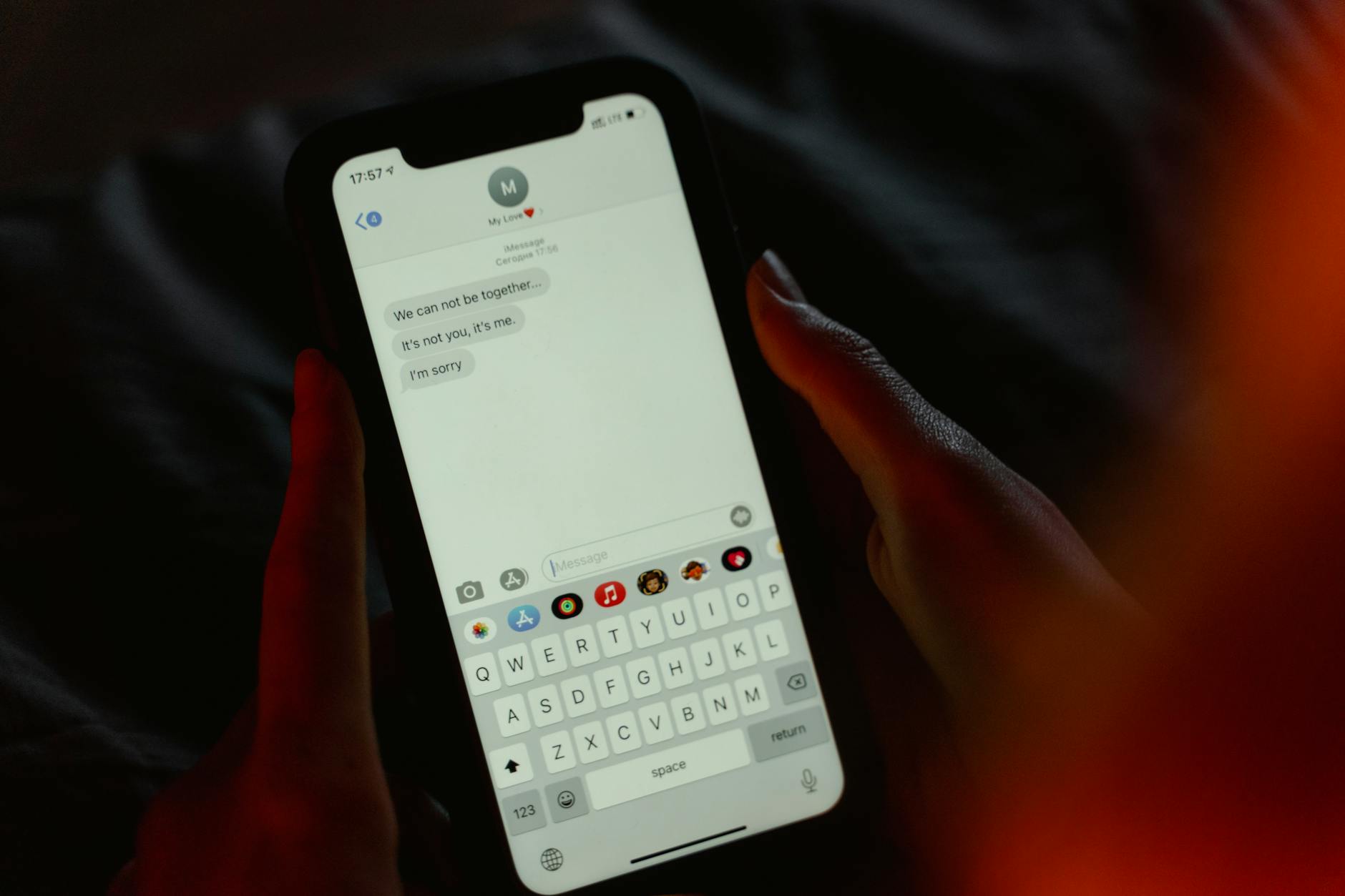
It's 11:47 PM. You're in bed, phone screen glowing in the dark, thumbs furiously typing a response to your partner's last message. The conversation started innocently—a question about weekend plans—but somewhere in the last 47 messages, it devolved into a full-blown argument about respect, priorities, and whether anyone even cares about this relationship anymore.
Sound familiar?
You're not alone. Research from the Pew Research Center (2025) found that 64% of adults in relationships report having had a significant argument conducted primarily through text messaging or digital platforms. Among adults under 35, that number climbs to 78%. We are, increasingly, fighting through our phones—and we're not very good at it.
Digital conflict is fundamentally different from face-to-face disagreement. Without tone of voice, facial expressions, and physical proximity, messages become ambiguous canvases onto which we project our worst fears. A period at the end of a sentence ("Fine.") feels hostile. A delayed response signals withdrawal or punishment. An emoji intended as playful reads as dismissive.
In this comprehensive guide, we'll explore:
- The science of why text fights escalate so quickly and destructively
- The unique challenges of asynchronous, written communication
- Common triggers that turn casual messages into conflicts
- Evidence-based strategies for de-escalating digital arguments
- When and how to move offline for resolution
- Platform-specific considerations for different messaging apps
- How to set digital boundaries that protect your relationships
Tools like VerdictBuddy can help when text conflicts have created impasses, providing structured frameworks for resolution that work better than endless back-and-forth messaging.
Let's decode the minefield of digital conflict.
Why Text Fights Are Different: The Communication Deficit
The Missing 93%
Communication researcher Albert Mehrabian's famous (and often misinterpreted) studies suggested that in emotional communication, words account for only about 7% of the message—tone of voice contributes 38%, and body language 55%.
While these exact percentages are debated and context-dependent, the fundamental insight holds: most emotional communication is nonverbal. In text, we're operating with a fraction of our normal communication toolkit.
| Face-to-Face Communication | Text-Based Communication |
|---|---|
| Words + tone + facial expression | Words only |
| Immediate feedback and adjustment | Delayed responses |
| Physical presence creates safety | No physical safety cues |
| Natural turn-taking | Overlapping message composition |
| Gestures soften harsh words | Punctuation carries enormous weight |
| Eye contact builds connection | No visual connection |
| Breathing and pace regulate emotion | No physiological co-regulation |
Without positive cues to counterbalance, our brains apply their natural negativity bias to text interpretation. Studies published in Computers in Human Behavior (2023) found that:
- Neutral text messages are interpreted as more negative than neutral face-to-face statements
- Ambiguous texts are more likely to be interpreted negatively by recipients who are already stressed or anxious
- The same message shown to people in different emotional states produces wildly different interpretations
"In the absence of information, the brain fills in with fear." — Dr. Emma Seppälä, Science Director at Stanford Center for Compassion and Altruism Research
The Asynchrony Problem
Real-time conversation has a rhythm—statement, response, adjustment. Text messaging disrupts this:
The Anatomy of a Text Fight: How Conflicts Escalate
Stage 1: The Spark
Text fights rarely start as conflicts. Common innocent beginnings:
- A logistics question ("What time is dinner with your parents?")
- Sharing information ("I saw an article about that thing we discussed")
- A bid for connection ("How's your day going?")
- A casual observation ("Your sister posted something interesting")
Stage 2: The Misinterpretation
At some point, a message is read differently than intended:
- "Fine." is interpreted as passive-aggressive
- A joke lands as criticism
- A question sounds like an accusation
- Silence is read as withdrawal or punishment
- An emoji seems dismissive or sarcastic
Stage 3: The Defensive Response
The receiver, feeling attacked, responds defensively—which the original sender experiences as an unprovoked attack on them:
Original sender's experience: "I asked a simple question, and they came at me hostile." Receiver's experience: "They criticized me, and when I defended myself, they got defensive."Both people now feel victimized and justified in their escalating responses.
Stage 4: The Spiral
The conflict escalates through several mechanisms:
- Topic broadening: The argument expands from dishes to respect to "you always" and "you never"
- Evidence gathering: Past texts are screenshot and reintroduced as evidence
- Duration exhaustion: The longer it goes, the more invested in "winning"
- Audience awareness: Knowing texts can be saved and shared changes behavior
- Ammunition stockpiling: Points are saved for future deployment rather than resolved
Stage 5: The Aftermath
Text fights often end unsatisfactorily:
- Ghosting: Someone stops responding, leaving issues unresolved
- Exhaustion surrender: "Fine, whatever, I don't care"—not actual resolution
- Forced pivot: Real-life demands interrupt without closure
- Screenshot evidence: Messages are saved for future conflicts
- Rumination: Both parties replay the exchange, often with increasing negative interpretation
Common Triggers: What Starts Digital Conflicts
Trigger 1: The Dangerous Period
Punctuation carries disproportionate weight in digital communication. Research from Binghamton University found that text messages ending with a period are perceived as less sincere than those without.
- "Sure." = hostile
- "Sure" = neutral/positive
- "Sure!" = enthusiastic
Trigger 2: The Read Receipt
Modern messaging apps often indicate when a message has been read. The gap between "read at 3:47" and a response (or lack thereof) creates anxiety and resentment:
- "They saw my message and didn't respond for two hours"
- "They read it and just... nothing?"
- Leads to assumptions about priorities, respect, and care
Trigger 3: Response Time Discrepancies
When one person responds instantly and the other takes hours, dynamics shift:
- The quick responder may feel undervalued or ignored
- The slower responder may feel overwhelmed or controlled
- Different expectations create ongoing friction
Trigger 4: The Voice-to-Text Mishap
Voice-to-text transcription errors create unintended messages:
- "I love you" becomes "I'm leaving"
- "That's fine" becomes "That's fun" (changing meaning entirely)
- Critical words are omitted or changed
Trigger 5: The Emoji Minefield
Emoji interpretation varies by generation, culture, and relationship:
- 🙂 = friendly to some, passive-aggressive to others
- 👍 = acknowledgment to some, dismissive to others
- 😂 = funny to some, mocking to others
A 2024 study found that the same emoji is interpreted differently by different age groups up to 75% of the time.
Trigger 6: The Screenshot Share
Knowing that texts can be screenshot and shared changes the dynamic:
- "I can't believe you're making me the villain here"
- Awareness of potential audience affects authenticity
- Messages become performances for potential jury
Trigger 7: The Unsolicited Advice Text
Long texts containing advice or "feedback" often trigger defensiveness:
- Lack of real-time adjustment means the "advice" keeps coming
- Receiver feels lectured at rather than dialogued with
- No ability to interrupt or redirect
Evidence-Based Strategies for Digital De-escalation
Strategy 1: The Pause Rule
When you feel activation (faster heartbeat, tension, urge to respond immediately), pause:
The 10-10-10 Rule:- Wait 10 seconds before typing
- Wait 10 minutes before sending
- Ask: "Will this matter in 10 days?"
During the pause:
- Take slow breaths
- Notice body sensations
- Consider alternative interpretations
- Ask: "What do I actually want from this conversation?"
Strategy 2: The Clarification Before Reaction
Before responding to something that feels like an attack, seek clarification:
- "I want to make sure I'm understanding you—are you saying...?"
- "I might be reading this wrong. Can you help me understand?"
- "I'm not sure how to take this. What did you mean by...?"
This interrupts the escalation cycle by introducing uncertainty rather than matching perceived aggression with defense.
Strategy 3: The Explicit Tone Marker
In the absence of tone, provide it explicitly:
- "(not being sarcastic) I really think that's a good idea"
- "(saying this gently) I'm worried about your health"
- "(genuinely curious, not accusing) Why did you decide to do it that way?"
Yes, it feels awkward. It's still more effective than having your genuine question read as interrogation.
Strategy 4: The Phone Call Pivot
When you notice escalation, request a pivot:
- "This is getting complicated in text. Can we talk on the phone?"
- "I want to understand you, and I don't think I can over text. Voice chat?"
- "I think we're misreading each other. Call in 15 minutes?"
Key: Frame the pivot as desire for connection, not escape from accountability.
Strategy 5: The Accountability Statement
Disarm escalation by taking accountability early:
- "I see how my message could have come across badly. Let me try again."
- "I realize I was being reactive there. Here's what I actually mean..."
- "Rereading my message, it was harsher than I intended."
Strategy 6: The "Story I'm Telling Myself" Frame
Brené Brown's technique works in text:
- "The story I'm telling myself is that you're upset with me about the dinner thing. Is that accurate?"
- "When you didn't respond for hours, the story in my head became that you don't care. I know that might not be true—can you help me understand?"
This owns your interpretation as interpretation rather than accusing based on assumption.
Strategy 7: The Cooling-Off Agreement
Pre-establish guidelines for when arguments heat up:
- "When texts start getting heated, either of us can call a pause"
- "We agree not to continue important conversations past 10 PM"
- "If either person asks to move to voice, we commit to doing so"
When to Move Offline: Recognizing the Limits of Text
Signs That Text Has Hit Its Limit
Move to voice or in-person when:
How to Request Moving Offline
Frame it positively:
✅ "I really want to understand you, and I don't think text is working. Can we talk?"
✅ "This is important, and I want to give it proper attention. Voice chat tonight?"
✅ "I'm worried about misreading your tone. Can we do video so I can see your face?"
🚫 "I'm not doing this over text anymore."
🚫 "I can't deal with your messages right now."
🚫 "This is stupid. Call me or forget it."
The Offline Conversation Structure
When you do move offline, structure helps:
Platform-Specific Considerations
Texting/iMessage/SMS
- Limitations: Most basic features, no reactions, easy to screenshot
- Read receipts: Can create anxiety; consider disabling
- Green vs. blue bubbles: Creates in-group/out-group dynamics
- Character limits: Can force artificial breaks in thought
- Blue check marks: Visible read receipts create accountability
- "Typing..." indicator: Produces anticipatory anxiety
- Voice messages: Alternative to text that preserves some tone
- "Last seen": Creates monitoring behavior
Instagram DMs
- Ephemeral expectations: People may expect quicker, more casual responses
- Seen indicator: No option to hide
- Screenshot notifications: Only on disappearing messages
- Public relationship context: Conflict happens against backdrop of curated public image
Slack/Teams (Workplace)
- Professional context: Conflict has career implications
- Searchability: Messages may be reviewed by HR or management
- Channel vs. DM dynamics: Some conflicts shouldn't happen in channels
- Status indicators: "Active" expectations
- Formality: Longer format creates expectation of thought-out communication
- Response time norms: Days, not minutes
- CC/BCC dynamics: Audience awareness
- Permanence: Often archived and searchable
Setting Digital Boundaries That Protect Relationships
Boundary 1: Time Boundaries
Agree on when digital communication is and isn't appropriate:
- No heavy conversations after 10 PM
- Not during work hours for personal conflicts
- Not during family time or other commitments
- Response time expectations that are realistic
Boundary 2: Topic Boundaries
Some topics don't belong in text:
- Major relationship decisions
- Discussions about sex or intimacy concerns
- Financial decisions above a certain threshold
- Conflicts involving third parties
- Topics with extensive emotional history
Boundary 3: Format Boundaries
Specify preferred channels for different purposes:
- Quick logistics = text
- Important discussions = phone or video
- Conflict resolution = in person when possible
- Sensitive topics = never text
Boundary 4: Privacy Boundaries
Establish expectations about message privacy:
- Are conversations private or can they be shared?
- What about sharing with best friends or therapists?
- Under what circumstances might screenshots be used?
- How do you handle accidental message forwarding?
Boundary 5: Notification Boundaries
Manage the intrusiveness of digital conflict:
- Muting conversations when needed for focus
- Using "Do Not Disturb" during certain hours
- Communicating when you're stepping away
- Not using read receipts as weapons
Case Studies: Digital Conflict in Action
Case Study 1: The Emoji Disaster
The Situation: Marcus texted his girlfriend Lily about dinner plans. She responded "OK 🙂" which he interpreted as passive-aggressive. He responded with "What's that supposed to mean?" and the fight was on. What Happened: To Lily, "OK 🙂" was warm and agreeable. To Marcus, the slight smile emoji read as sarcastic because that's how his friends use it. Neither realized they were operating with different emoji vocabularies. The Resolution: After an hour of escalating texts, Lily called Marcus. In voice, the misunderstanding was resolved in minutes. They now use explicit tone markers and have an agreed emoji lexicon for their relationship.Case Study 2: The Response Time War
The Situation: In Alex and Jordan's relationship, Alex responds to texts within minutes while Jordan often takes hours. Alex felt deprioritized; Jordan felt surveilled. What Happened: Alex's quick responses came from availability (desk job) and attachment style (anxious). Jordan's slower responses came from work style (meetings) and attachment style (avoidant). Neither understood the other's context. The Resolution: Through couples therapy, they established expectations—no response expected within 2 hours during work, but acknowledgment within 4 hours. Both compromised from their defaults.Case Study 3: The Screenshot Escalation
The Situation: During a text argument, Tyler screenshot his partner Kim's messages and sent them to a friend saying "look how crazy they're being." Kim saw the forward notification and trust was shattered. What Happened: Tyler sought validation during conflict—normal impulse, problematic execution. Kim felt exposed and humiliated, wondering what else had been shared. The Resolution: This required significant repair work with a therapist. They established a new boundary: relationship conflicts are never shared via screenshot without both parties' consent.Case Study 4: The Late-Night Spiral
The Situation: Chris and Pat had a minor text disagreement at 10 PM that escalated until 3 AM, with both sleep-deprived and increasingly irrational. What Happened: Exhaustion impaired judgment. Each message felt urgent. The escalation fed on itself. By morning, things said were hard to unsay. The Resolution: They implemented a "10 PM Rule"—any tense conversation after 10 PM must be tabled until the next day. They acknowledge "I'm upset, but I want to discuss this when we're both fresh."Key Takeaways
Frequently Asked Questions
1. Is it ever appropriate to have serious conversations over text?
It depends on the relationship and topic. Quick clarifications about feelings or minor concerns can work in text. However, major discussions—relationship status, significant grievances, financial decisions—generally need richer communication channels. The rule of thumb: the more important or emotionally loaded, the more you need voice or presence.
2. My partner refuses to move offline when I ask. What do I do?
First, express why you want to move offline: connection, not avoidance. If they still refuse, you can set a boundary: "I'm not able to continue this conversation effectively in text. I love you and want to resolve this. Let's talk when we can do voice." Then disengage kindly and follow up about scheduling a call.
3. How do I apologize effectively over text when I can't do it in person?
Text apologies can work but require care. Be specific about what you're apologizing for. Take full responsibility without qualifiers ("I'm sorry you felt hurt" doesn't count). Express empathy for their experience. Describe what you'll do differently. Don't immediately request forgiveness or reassurance. If possible, follow up with voice or in-person conversation.
4. Is it okay to take hours or even days to respond when I'm upset?
A brief cooling-off period is healthy. However, extended silence as punishment is not. The key is communication: "I need some time to process before I respond. I'll text you tomorrow" is different from disappearing for three days. Silent treatment, whether digital or in-person, is considered a form of emotional manipulation.
5. How do I handle text conflicts with coworkers, which have professional implications?
Professional digital conflicts require extra caution. Assume messages may be screenshotted and reviewed by HR. Move contentious discussions to video or in-person quickly. Focus on issues, not personalities. Use collaborative language. When in doubt, suggest a meeting to "align." Document appropriately if the conflict is serious.
6. What if I'm more comfortable in text and my partner prefers phone/in-person?
This is a common introvert/extrovert or neurodivergent/neurotypical dynamic. Compromise is key: perhaps they can give you text time for initial processing, then you move to voice for resolution. Neither preference is wrong—but both parties need to stretch toward each other.
7. Should I delete text fights after they're resolved?
This is personal and depends on the relationship. Some couples prefer to delete to prevent rumination and rehashing. Others keep texts as record. The danger of keeping is using old messages as ammunition. If you keep them, commit to not rereading or quoting them in future conflicts.
8. How do I break the habit of checking my phone constantly during text conflicts?
Physical separation helps: put your phone in another room, give it to a friend, or use app blockers. Set structured check times: "I'll look at messages at the top of each hour." Engage in activities that require hands (cooking, exercise). Remind yourself: nothing said in a text conflict is so urgent it can't wait 30 minutes.
9. My partner sends very long texts during arguments. How do I respond?
Long texts often indicate someone processing out loud. You don't need to respond to every point. Summarize: "I hear several things—let me make sure I understand the main concern." Request breaks: "There's a lot here. Can I respond to the first part now and the rest later?" Suggest voice if the volume indicates complexity.
10. Is it possible to have healthy conflict over text, or should all conflict be offline?
Healthy text conflict is possible for smaller issues with clear communication. Keys: explicit tone, quick clarification-seeking, willingness to pivot, and mutual good faith. For significant conflicts, offline is almost always better. The test: if you've exchanged more than 10 messages without resolution, move to voice.
Conclusion: Navigating the Digital Minefield
Digital communication isn't going away—it's only becoming more central to how we relate. Learning to navigate conflict in this medium isn't optional; it's essential for modern relationships of all kinds.
The core challenge is this: text strips communication of nearly everything that helps us understand each other. Without tone, facial expression, touch, and immediate feedback, we're operating with a fraction of our normal relational toolkit. It's like trying to cook a complex meal with only a butter knife—possible, but requiring much more skill and patience.
The strategies in this guide—pausing, clarifying, using explicit tone markers, knowing when to pivot—are that skill. They don't make text conflict easy, but they make it survivable.
Key principles to remember:
When digital conflicts have created impasses—when the text thread has become a battleground neither person can exit—tools like VerdictBuddy offer structured frameworks for resolution. Sometimes an external structure can break patterns that individual effort cannot.
The goal isn't to eliminate digital conflict—that's neither possible nor desirable in our connected world. The goal is to fight better digitally: with more clarity, less escalation, and faster movement toward resolution.
Your relationships are too important to be destroyed by misunderstood emojis and response time anxiety. With intention and skill, even the minefield of digital communication can be navigated.
This article is for informational purposes only and does not constitute psychological or relationship advice. If you're experiencing communication patterns that feel abusive or controlling, please seek support from a qualified professional.
Sources & References
Frequently Asked Questions
Written by
VerdictBuddy Team
The VerdictBuddy team specializes in conflict resolution, relationship psychology, and communication strategies.